
The Best TTS Platforms With Integrated Audio Ads
Every month, millions of visitors leave publisher websites without consuming content. Not because they’re uninterested, but because they’re busy commuting, exercising, or multitasking. Text-to-speech technology solves this problem while opening a lucrative revenue stream that most publishers haven’t tapped: audio advertising.
But not all text-to-speech platforms deliver the same monetization potential. The difference between platforms can mean thousands of dollars in monthly revenue. Some offer sophisticated programmatic ad insertion with pre-roll, mid-roll, and post-roll capabilities. Others provide basic features that generate minimal returns.
So in this guide we’ll examine the four best TTS platforms that combine natural AI voices with proven audio advertising integration. You’ll learn which platforms deliver the highest revenue potential, the easiest implementation, and the most flexibility for your publishing business.
TLDR:
Millions of visitors abandon publisher websites not because they’re uninterested, but because they can’t consume text while multitasking. Text-to-speech (TTS) technology fixes this problem and opens a revenue stream most publishers ignore: audio advertising.
But choosing the wrong TTS platform can cost you thousands in monthly revenue. That’s why the best platforms combine natural AI voices with programmatic ad insertion (pre-roll, mid-roll, and post-roll) to maximize earnings.
The four best contenders include:
- Trinity Audio ($5.42/month) offers the most monetization flexibility with programmatic ads, native AI sponsorships, and hybrid display/audio units across 125+ languages.
- SpeakUp Article (free for small sites) delivers a solid 50/50 revenue share with patented dynamic ad insertion and supports 150+ languages.
- WebsiteVoice ($9/month) provides straightforward implementation with advertising partnerships that run ads before or after audio playback in 38 languages.
- Ad Auris (free with 10 credits/month) integrates with Google Ad Manager and supports subscription models for premium audio content distribution to Spotify and Apple Podcasts.
The Bottom Line:
Every day without audio monetization means losing revenue from visitors who’d consume your content if they could listen to it. So go ahead and pick the platform that matches your resources and revenue goals, test it, and scale from there.
What Is Programmatic Audio?
Programmatic audio refers to the automated process of buying, selling, and placing ads within audio content such as podcasts, audio articles, digital radio, and streaming platforms. It represents the entire ecosystem of digital advertising transactions that take place autonomously in the audio space.
It gives advertisers more precise targeting, improved measurement, and effective retargeting, allowing campaigns to run with greater efficiency.
On top of that, it simplifies campaign management, reduces manual effort, and integrates audio initiatives with other digital channels. As a result, brands can deliver consistent, data-driven messaging while reaching audiences in a more personal and engaging way.
Key Benefits For Advertisers And Publishers:
- Accelerated production: Quickly generate, preview, and deploy multiple audio creatives with natural-sounding synthetic voices and background tracks.
- Effortless personalization at scale: Leverage millions of creative combinations for deep listener targeting.
- Flexible, cost-free creative updates: Edit and iterate freely. No production fees, no waiting.
- Brand consistency: Maintain a unified audio identity across all ad variations with consistent voiceovers.
- Simplified workflow: Manage the entire creative process (from script to post production) within one self-serve platform.
- Stronger engagement: Deliver contextual audio ads that resonate with listeners, boosting relevance, attention, and overall campaign performance.
- Increased monetization opportunities: Stronger targeting and engagement drive better ROI for both advertisers and publishers.
- Real-time insights: Understand your audience, segment effectively, and optimize campaigns on the go.
- Precise targeting: Reach listeners based on location, demographics, interests, and even playlist or genre.
- Contextual relevance: Deliver ads at the right moment and place for authentic, immersive engagement.
Comparison: Best TTS Platforms With Integrated Audio Ads
4 Best TTS Platforms With Integrated Audio Ads
The platforms below were selected based on three main criteria: seamless audio ad integration, proven monetization models, and publisher-friendly implementation. Each offers distinct advantages depending on your content volume, technical resources, and revenue goals.
Here’s how they compare.
1. Trinity Audio
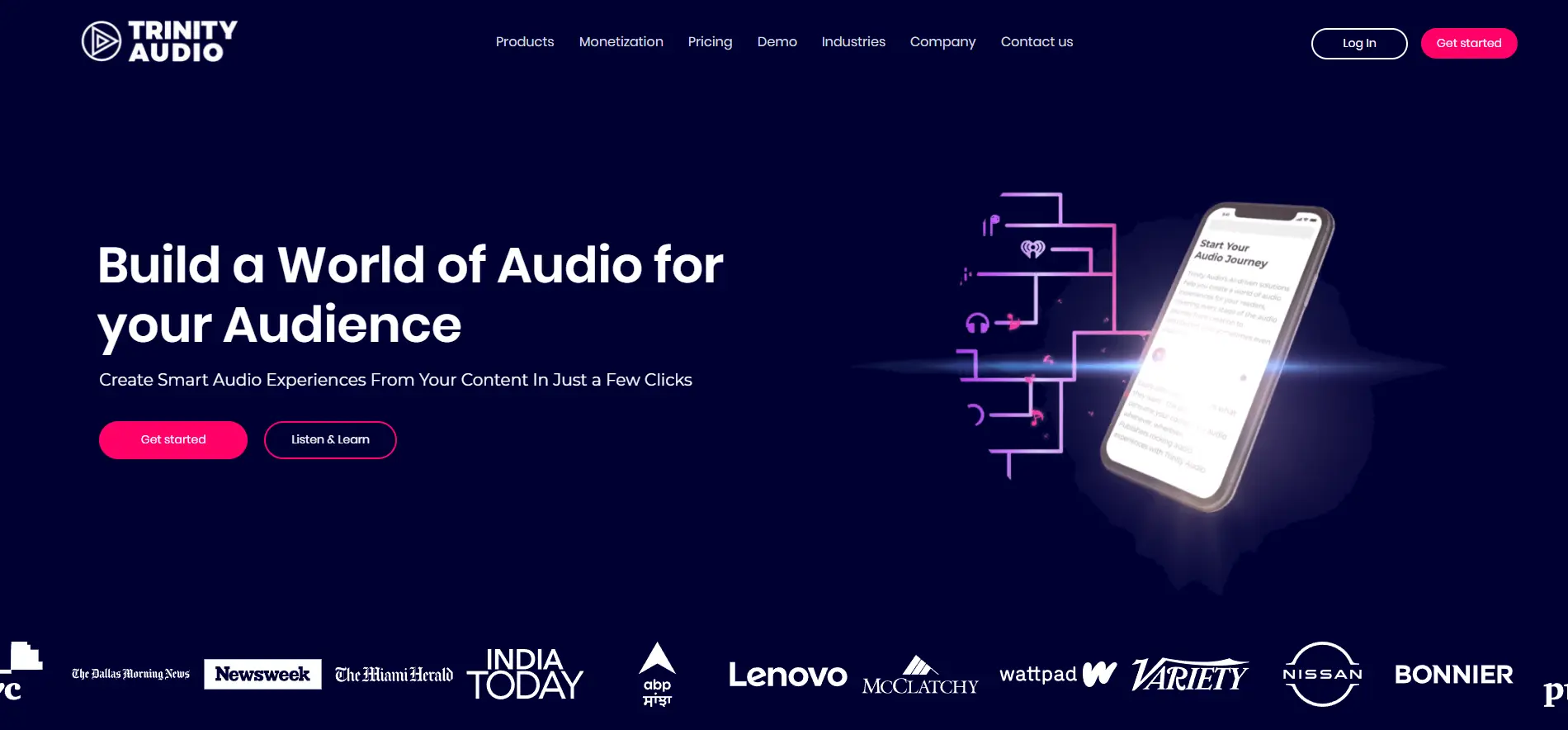
Trinity Audio is an AI-powered content platform that offers text-to-speech to help publishers and creators convert written content into lifelike audio in over 125 languages. It supports every stage of the audio journey, from creation to distribution, learning from listener behavior while helping monetize content through ad insertion and integrated advertising.
Why It’s A Good Option For Publishers
Trinity Audio offers a text-to-speech platform with built-in audio advertising integration through its Trinity Player. The player integrates seamlessly with websites and allows visitors to listen to text-based content on the go.
The platform supports multiple monetization options like programmatic ad insertion, including pre-roll, mid-roll, and post-roll ads based on audience data to improve targeting, timing, and revenue.
It also enables direct ads and AI-voiced sponsorships that create a podcast-like experience. Additionally, the platform includes a display ad audio player that combines an audio player, banner display, and customizable call-to-action for additional revenue opportunities.
2. SpeakUp Article

SpeakUp Article is an AI-powered platform that converts written content into real-time spoken articles to make text-based content more accessible, engaging, and inclusive. It helps publishers monetize through audio, video, and display ads, with built-in dynamic ad insertion, revenue sharing, and white-label solutions.
Why It’s A Good Option For Publishers
SpeakUp Article offers an advanced TTS ad insertion platform that allows publishers to embed an audio player with seamless audio advertising integration. The player supports pre-roll, mid-roll, and post-roll ad formats, and provides a smooth listening experience without disrupting users.
On top of that, it’s built to integrate easily into existing publishing and advertising ecosystems through options like a WordPress plugin, Google Tag Manager, JavaScript code, or ad server delivery.
Monetization is built in through patented dynamic ad insertion and a standard 50/50 revenue share model. Publishers can use existing ads or replace them with their own audio, video, or display campaigns.
SpeakUp Article supports over 150 languages, delivers natural AI voices, and complies with web and accessibility standards, which makes it a reliable text-to-speech platform for news sites, blogs, and educational publishers.
3. WebsiteVoice
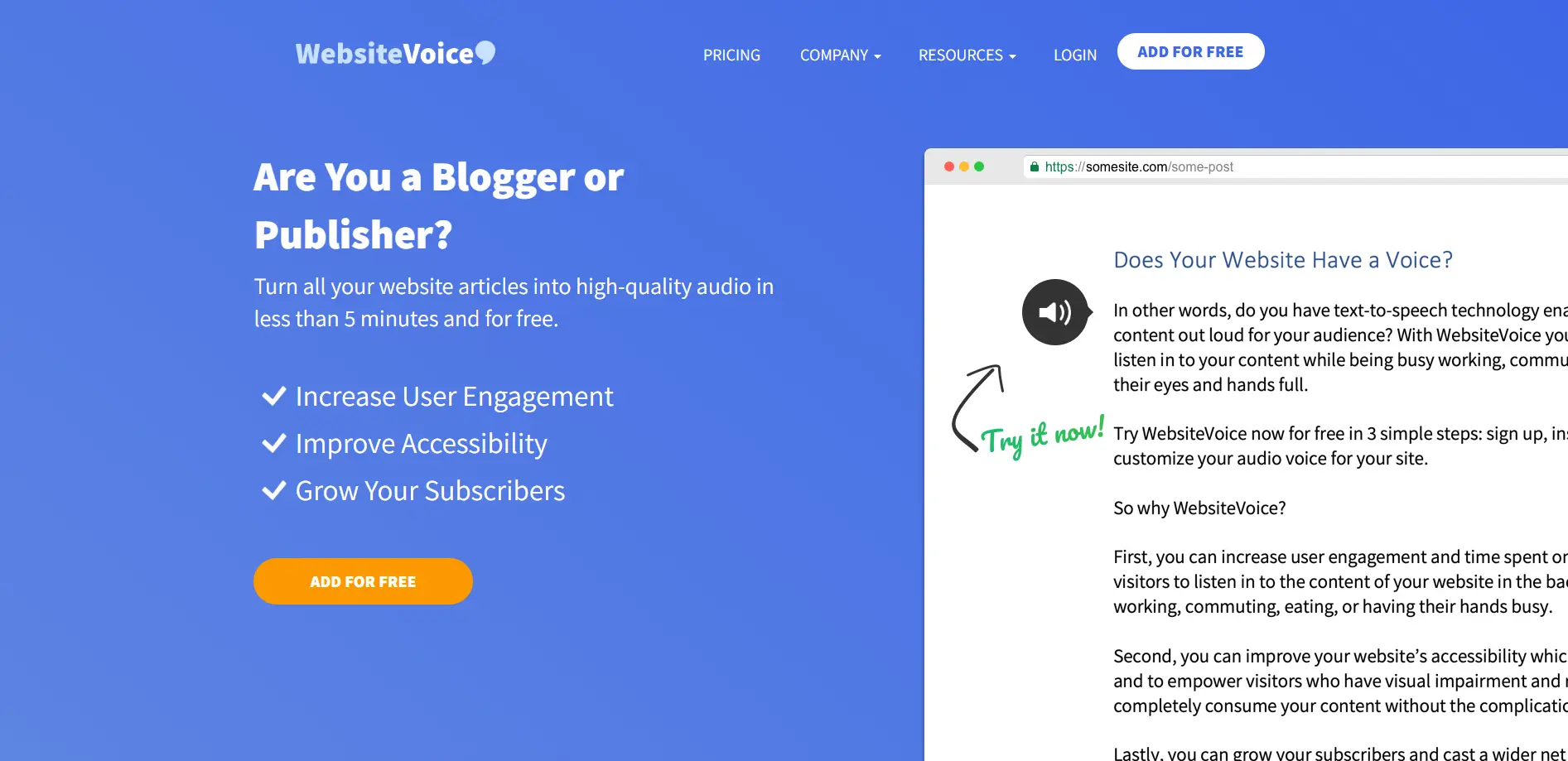
WebsiteVoice is an AI-powered text-to-speech (TTS) platform that turns written website content into natural, high-quality audio. It helps publishers boost engagement and accessibility, reach visitors who prefer listening over reading, and increase website monetization and subscriber growth.
Why It’s A Good Option For Publishers
WebsiteVoice offers a customizable TTS widget that converts website content into high-quality speech. The widget is easy to install using a simple JavaScript snippet or WordPress plugin and can be tailored to match your site’s design. It’s also compatible with most web-hosting platforms.
The widget includes standard playback controls like play, pause, and stop, and features Automatic Content Recognition (ACR) and Smart Adaptive Voice (SAV) for clear narration in over 38 languages.
For publishers looking to monetize, WebsiteVoice supports audio advertising integration through its Advertising Partnership model. Publishers can earn revenue by running short ads before or after the audio playback, turning listener engagement into income.
4. Ad Auris

Ad Auris is an AI-powered narration tool that converts written content into natural-sounding audio using synthetic speech. It recognizes written features to create realistic, customizable audio experiences that help publishers extend their reach, increase engagement, and generate new revenue streams.
Why It’s A Good Option For Publishers
Ad Auris offers a text-to-speech audio player that can be easily embedded on any website or CMS using a simple tag and customized to match the publisher’s branding. It also supports distribution to external platforms like Spotify and Apple Podcasts via RSS feeds to help publishers reach wider audiences.
The platform integrates with Google Ad Manager for audio ad insertion, and enables publishers to include pre-roll, mid-roll, and post-roll ads within their narrations. It supports programmatic advertising for automated ad placement.
Publishers can also monetize through subscription models by offering premium, subscriber-only audio versions of their content.
Conclusion
Publishers who embrace text-to-speech technology with integrated audio advertising gain three immediate advantages: they capture audiences who prefer listening over reading, they monetize existing content without additional production costs, and they create audio revenue streams that complement traditional display advertising.
That said, all four platforms we reviewed solve the fundamental challenge of turning written content into revenue-generating audio. What you must know is that:
- Trinity Audio leads with comprehensive monetization options including programmatic ads, native sponsorships, and hybrid display units.
- SpeakUp Article excels with its 50/50 revenue share and patented dynamic ad insertion across 150+ languages.
- WebsiteVoice offers accessible entry with straightforward implementation and advertising partnerships.
- Ad Auris provides Google Ad Manager integration and subscription capabilities for premium content strategies.
The choice you’ll make depends on your specific needs: content volume, technical capabilities, language requirements, and revenue targets.
But the decision to implement audio advertising shouldn’t wait. Every day without audio monetization means leaving money on the table from visitors who would happily consume your content (if only they could listen to it).
So start with the platform that matches your current resources, test the revenue impact, and scale from there.

.png)